The Radcliffe Camera and the Bodleian
Oxford's most photographed building is a library annex. The one next door founded modern scholarship. Neither is a museum — and that changes what you can see.
The Round Building and What It Is For
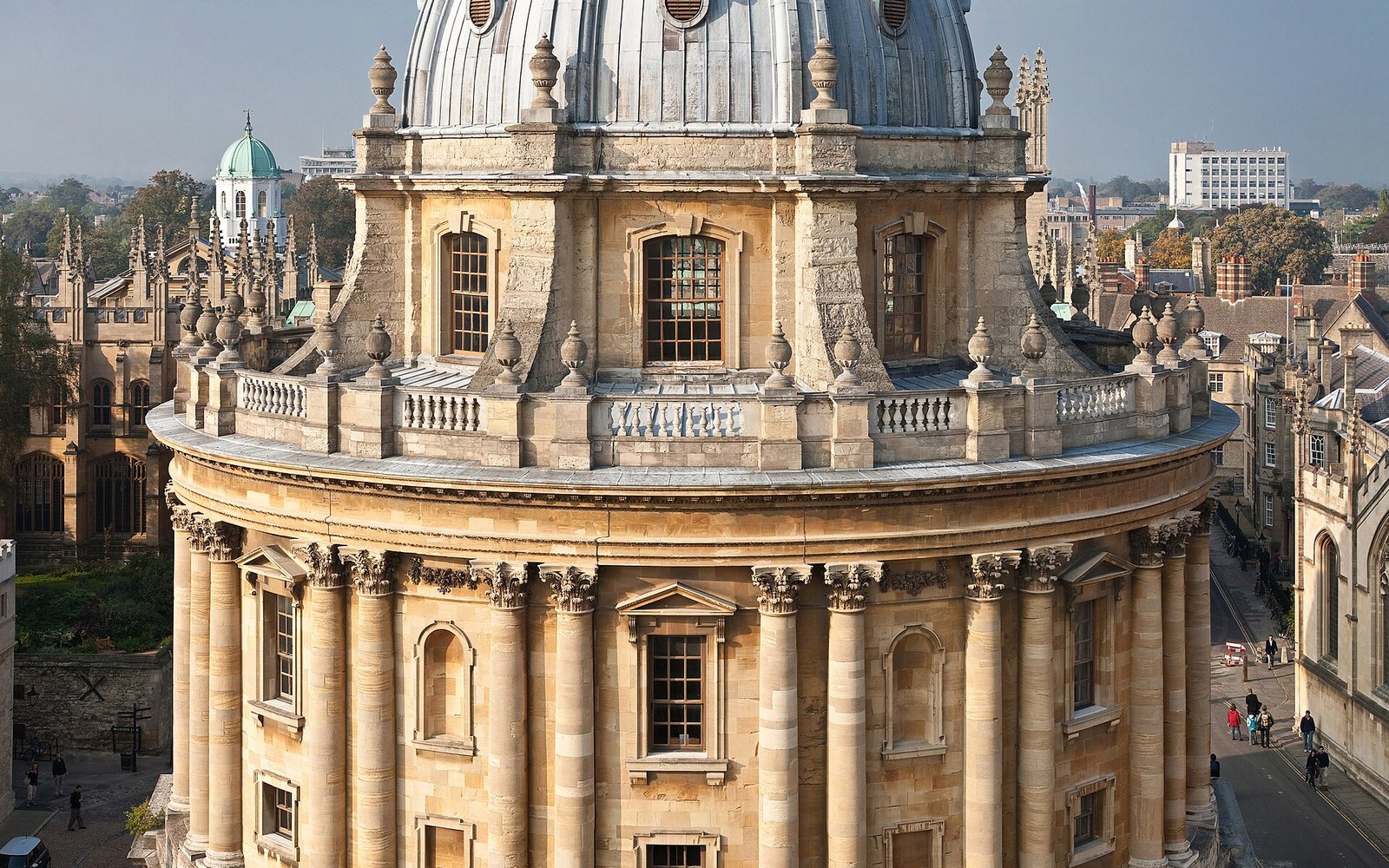
The Radcliffe Camera sits in the centre of Radcliffe Square like a stone drum that has forgotten it was ever meant to blend in. Completed in the mid-eighteenth century, it was built to house a scientific library — the Radcliffe Library — funded by a bequest from John Radcliffe, a physician who accumulated considerable wealth treating, among others, members of the royal family. The architect was James Gibbs, who gave it the dome, the rusticated base, the paired columns, and the general air of a building that knows it is being looked at.
What visitors sometimes miss is that the Camera is not a museum, a gallery, or an attraction in any conventional sense. It is a reading room — a working part of the Bodleian Library system, reserved for registered readers doing actual research. You cannot simply walk in. The exterior, the square around it, and the views from every angle are entirely free and entirely public; the interior is not. This is a distinction worth absorbing before you arrive with expectations.
The square itself rewards a slow circuit. The Camera occupies the centre; All Souls College closes one side; St Mary the Virgin — Oxford's university church, and the city's tallest spire — anchors another. The cobbles, the scale, and the way the dome rises above the surrounding roofline make this one of the more satisfying pieces of urban geometry in England. Come early morning or on a grey weekday afternoon and you may have most of it to yourself.
The Old Schools Quadrangle and the Bodleian Proper
A short passage from Radcliffe Square leads to the Old Schools Quadrangle — the original heart of the Bodleian Library. Where the Camera announces itself, the Old Schools Quad rewards patience. The quadrangle is a serious, rather austere rectangle, its buildings decorated with a Tower of the Five Orders, a neat piece of architectural pedagogy that stacks Tuscan, Doric, Ionic, Corinthian, and Composite columns one above the other up the tower face.
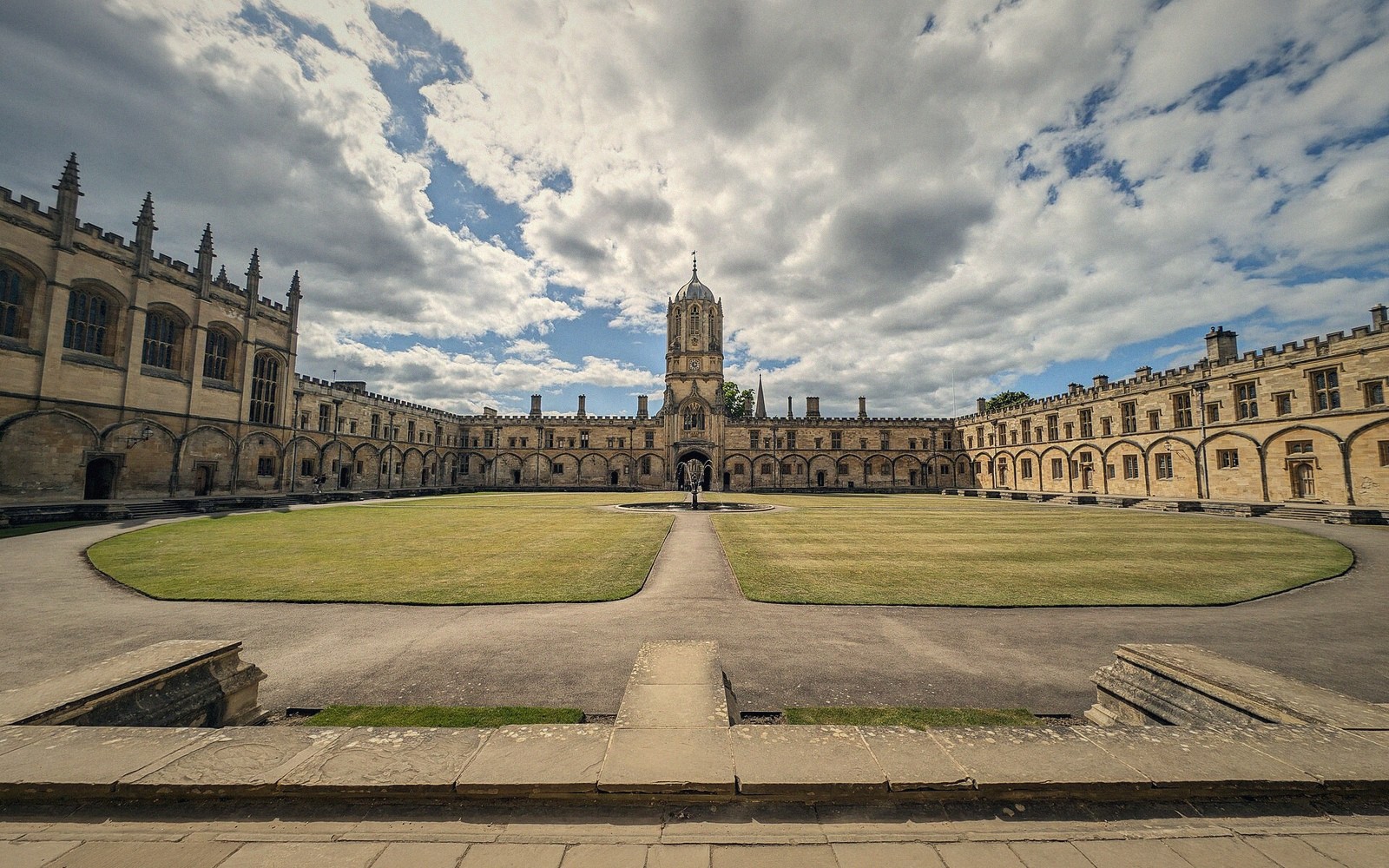
The Bodleian itself is one of the oldest university libraries in Europe and one of the legal deposit libraries of the United Kingdom — meaning it is entitled to receive a copy of every book published in Britain. The collection runs to millions of items and occupies several buildings across the city, with the original Bodleian quadrangle as its centre. The library was refounded in its modern form by Sir Thomas Bodley in the early seventeenth century, though the university had maintained a library on the site before that. The Duke Humfrey's Library — the medieval room above the Divinity School — is among the oldest reading rooms in continuous use anywhere, and it is genuinely extraordinary: a long, painted-ceiling chamber lined with chained books, its light falling in through Perpendicular windows.
Here, again, the distinction between reader and visitor applies. Duke Humfrey's Library is not a public space in the way a museum gallery is. The Bodleian runs guided tours that include it, and that is the standard route in for anyone who is not a registered reader. The Divinity School on the ground floor is a different matter — it is one of the finest examples of late-medieval vaulted stonework in England, and it is accessible independently of the tours. Worth knowing, worth seeking out.
What visitors sometimes miss is that the Camera is not a museum, a gallery, or an attraction in any conventional sense.
The Bodleian shop and its exhibition spaces in the Clarendon Building and Weston Library are also publicly accessible, and the Weston Library — the modern wing to the north, reopened after a major refurbishment in the early twenty-first century — holds a permanent display of items from the collection: manuscripts, maps, early printed books, and objects of genuine rarity. This display costs nothing to enter. It is, in practice, the best way for a non-reader to get close to what the Bodleian actually holds.
How to Use Both Without Frustration
The practical logic is straightforward: treat the Radcliffe Camera as architecture to be read from outside — study the dome, walk the square, notice how it sits in relation to All Souls and St Mary's — and treat the Bodleian as an institution to be entered through the Weston Library's free display or through a paid tour if Duke Humfrey's is what you are after. Neither visit requires booking weeks in advance. Neither requires you to be a student or an academic.
What both buildings share, beyond the limestone that connects them to the wider fabric of the city, is a quality of seriousness that is not unfriendly. They are working places that happen to be beautiful. The Camera was built to be imposing, and it is; the Bodleian was built to last, and it has. Visitors who arrive expecting a heritage experience and find instead a functioning library discover something more interesting: that Oxford's grandest buildings are grand because they are used, not because they have been preserved.
- early 17th centurySir Thomas Bodley refounded the Bodleian Library in its modern form
- mid-18th centuryRadcliffe Camera completed to James Gibbs's design
- early 21st centuryWeston Library reopened after major refurbishment
Related