Where to Eat That Isn't on the High
The High Street has food. It also has queues, tourist pricing, and the same chains that exist in every city. Here is where the locals actually go.
The streets worth knowing
Oxford's eating geography is simple once you see it: the High Street and Cornmarket catch the crowds; everyone else moves one or two streets away. The result is that some of the city's best food sits a five-minute walk from the worst of the scrum, in streets that feel like they belong to a different, calmer place entirely.
Cowley Road is the first address worth knowing. It runs southeast from the Plain roundabout — then through a mile of independent restaurants, cafés, grocery shops, and bakeries that serve the student population who actually live here rather than visit. The cuisine is genuinely mixed: Ethiopian, Vietnamese, Lebanese, South Asian, Middle Eastern. Nothing is performing authenticity for tourists, because the clientele doesn't require it. On a weekday lunchtime it is as close to unhurried as Oxford gets.
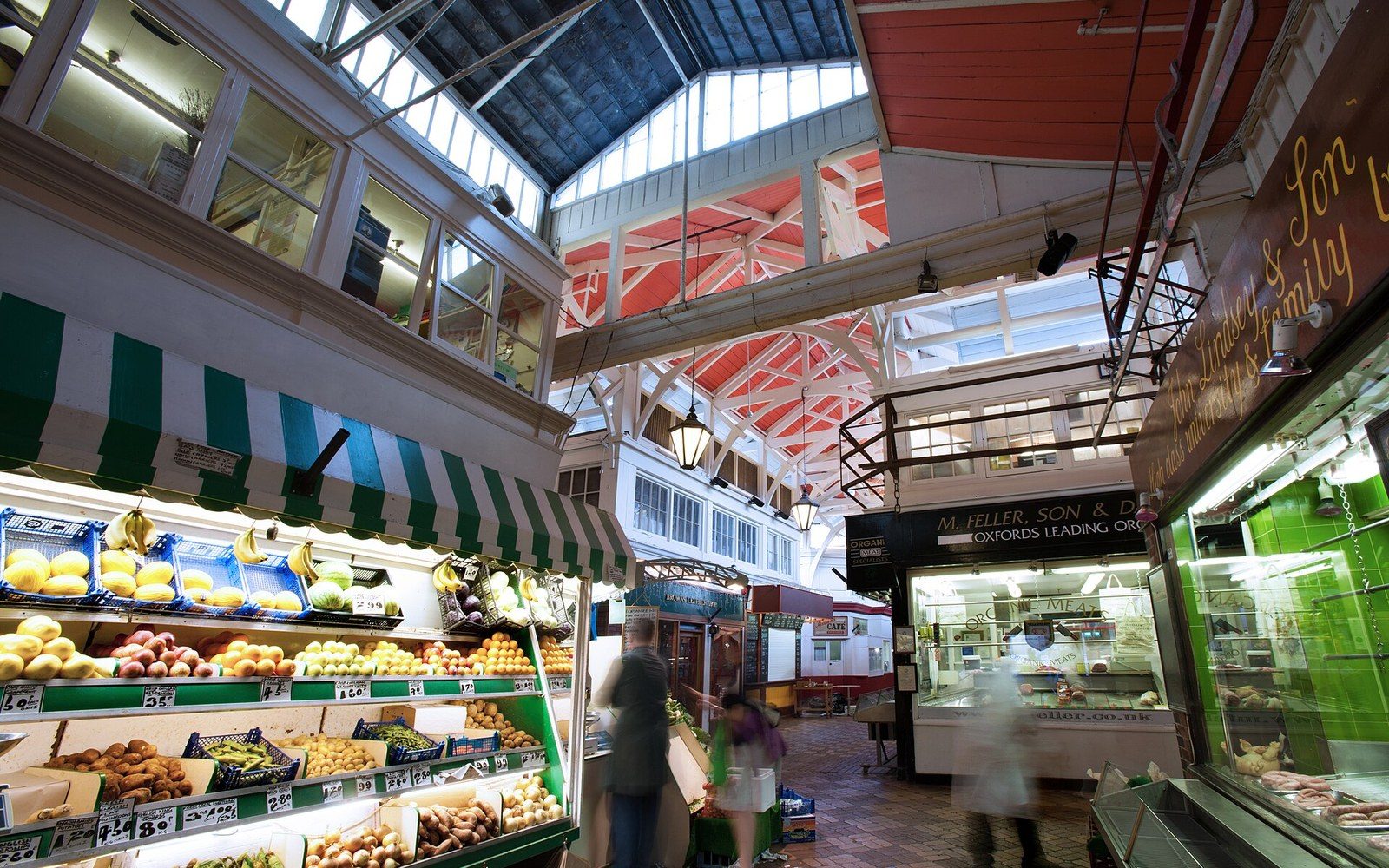
Walton Street, running through Jericho to the northwest, is quieter in register but just as useful. The neighbourhood has a cluster of independents — a good French bistro, several cafés that don't mistake atmosphere for food, a clutch of sandwich and lunch spots — operating for the residents who have lived here long enough to be unimpressed by novelty. The Covered Market is a short walk east and covers the midday gap well: a handful of stalls and counters inside do simple things — wraps, sandwiches, hot food — without the High Street premium.
What you are actually looking for
The distinction that matters most in Oxford isn't cuisine; it's who the restaurant thinks it's feeding. A place feeding local postgraduates, hospital staff and north Oxford families has different priorities than one feeding visitors who won't return. The former needs to be reliably good and honestly priced. The latter can survive on footfall alone.
St Clement's, just over Magdalen Bridge heading east, is short but has its own particular mix of independent spots running beneath the residential floors above — slightly forgotten, slightly better for it. The area around the Westgate end of town has grown, though new development brings the usual branded chains alongside the occasional independent worth pausing for. Apply the usual scepticism.
In the centre itself, the streets that run parallel to or feed away from the High — Turl Street, Holywell Street, Broad Street for its northern edge — are generally calmer than the main drag and tend to have a higher proportion of places actually worth entering. None of this is complicated geography; it is mostly a matter of walking one block further than the obvious choice and looking for a menu that isn't laminated.
Walton Street, running through Jericho to the northwest, is quieter in register but just as useful.
Breakfast is the meal Oxford gets most consistently right, in the sense that demand from students and college staff has kept a real café culture functioning in a way that lunch and dinner sometimes fail to match. George Street, running between Cornmarket and the railway-side end of town, has a handful of all-day café-style spots that hold up. The Gloucester Green area around the bus station is unpromising in appearance but contains a couple of good, brisk lunchtime options.
One genuine principle: eat early or eat late by Oxford standards. The city's dinner rush is compressed and real — early-evening seatings fill fast during term, when the student population descends simultaneously. A table at six or after nine is almost always easier than one at seven-thirty. The same applies to weekend lunches, when the tourist load on the centre is highest. Going at the off-beat hour is both practical and usually more pleasant — the room is calmer, the service less pressured.
The broader lesson is that Oxford rewards mild inconvenience. The best food in the city is almost never on the most obvious street, and the effort required to find it is genuinely small — a longer walk across Magdalen Bridge, a turn up into Jericho, a circuit of the Covered Market before settling. None of this is hardship. It is what visiting a real city rather than a stage-set version of one actually requires.
This guide carries no prices, opening times or event listings — they expire. Check anything time-sensitive on the day, at the door.
Related