The Ashmolean, Room by Room
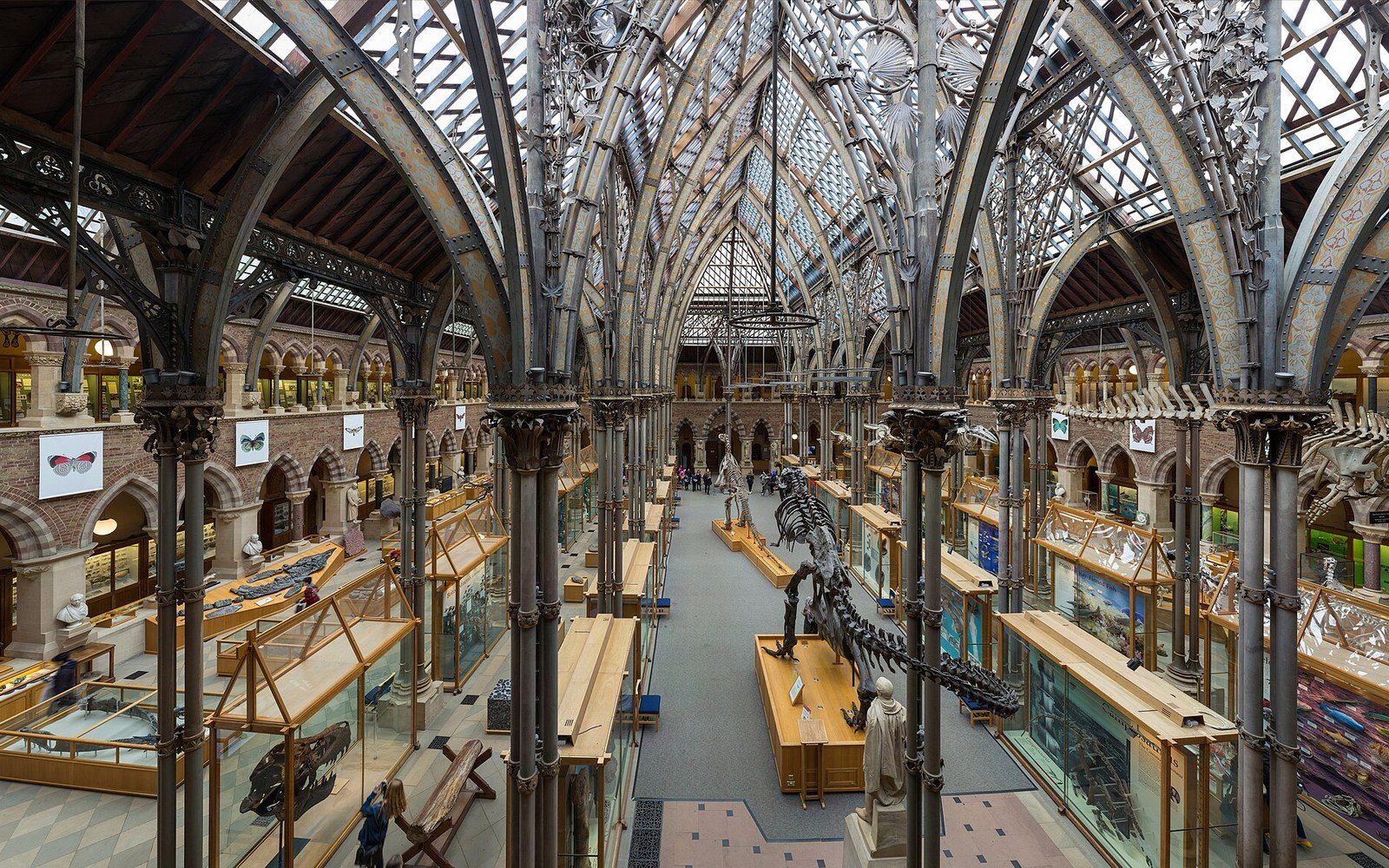
Britain's oldest public museum opened in 1683. Two hours, a plan, and you won't feel cheated.
What you're walking into
The Ashmolean on Beaumont Street is not a cabinet of curiosities — or rather, it started as one and has spent three centuries outgrowing the description. Elias Ashmole gave his collection to the University of Oxford, and the institution that resulted became the first public museum in Britain. The current building, a confident piece of Greek Revival architecture, dates from the nineteenth century; a substantial modern expansion deepened it at the back, adding space that most visitors never fully explore.
The collection runs from ancient Egypt to the Pre-Raphaelites, from Alfred the Great's putative jewel to Japanese woodblock prints. The breadth is the point — and also the trap. Walk in without a plan and you'll spend two hours in a pleasant fog and leave without a single sharp memory. The rooms reward a light itinerary.
A route that actually works
Start on the ground floor with the ancient world. The Egyptian galleries have a straightforward logic — death, afterlife, daily life — and the objects are extraordinary without requiring specialist knowledge. A coffin painted inside and out for an audience that would never see both sides at once concentrates the mind on how different the assumptions were. From there, move through the Near East and Greece: the cast of the Knossos fresco, the Minoan and Mycenaean material, then Rome.
The thing to hold onto in these rooms is proximity. In a national museum these objects would sit in purpose-built galleries with interpretive panels at thirty paces. Here you're close enough to read the Greek on a red-figure vase. That nearness is what the Ashmolean does that the British Museum, for all its scale, cannot always manage.
Take the stairs — not the lift — to the first floor. The route brings you through the European decorative arts, where the Tradescant collection still forms a quiet thread: the Powhatan Mantle, a deerskin cloak that arrived in Oxford in the seventeenth century and is one of the most significant surviving artefacts of early contact between England and the Americas. It's easy to walk past; don't.
The painting galleries on the upper floors hold a strong collection that visitors consistently underrate because they are not expecting it. Paolo Uccello's The Hunt in the Forest, one of the great perspective exercises of early Renaissance painting, is here. So is a room of Pre-Raphaelite work. So, in the prints and drawings study rooms, is material that rotates too often to predict — but the standard is consistently high and the room is almost always quiet.
Two hours is enough for a satisfying circuit if you commit to moving through rather than reading every label.
The Alfred Jewel is in the Early Medieval gallery. It is small, which surprises people, and the inscription around its edge — Ælfred mec heht gewyrcan, Alfred ordered me made — survives intact. Whether it was made for Alfred is a matter of scholarly debate; that it is one of the finest pieces of Anglo-Saxon goldwork in existence is not.
The floor you always skip
The lower ground floor, reached from the atrium stairs, holds the Eastern art collections and tends to be half-empty even when the rest of the museum is busy. The Chinese ceramics and bronzes are exceptional. The Japanese material — lacquerwork, prints, netsuke — is the kind of collection that rewards a slow half-hour if you've still got one to spend. Most visitors don't find this floor until their second visit, which makes it the reliable answer to the question of where to go when everywhere else is busy.
Practicalities of pace
Two hours is enough for a satisfying circuit if you commit to moving through rather than reading every label. Three hours lets you linger in the areas that catch you. The café in the basement is functional and not very expensive by museum standards; the rooftop is worth a look for the view back over Beaumont Street. Entry is free, which means there is no calculus about value — you can leave when you're done rather than when you feel you've extracted sufficient admission.
The Ashmolean is, in practice, one of the few places in Oxford where the building itself is less interesting than what's inside it. That's not a complaint.
- 1683Ashmolean opens, the first public museum in Britain
- 19th centurycurrent Greek Revival building constructed
- Recent decadesmajor rear expansion adds lower-ground galleries
This guide carries no prices, opening times or event listings — they expire. Check anything time-sensitive on the day, at the door.
Related