The Small Collections
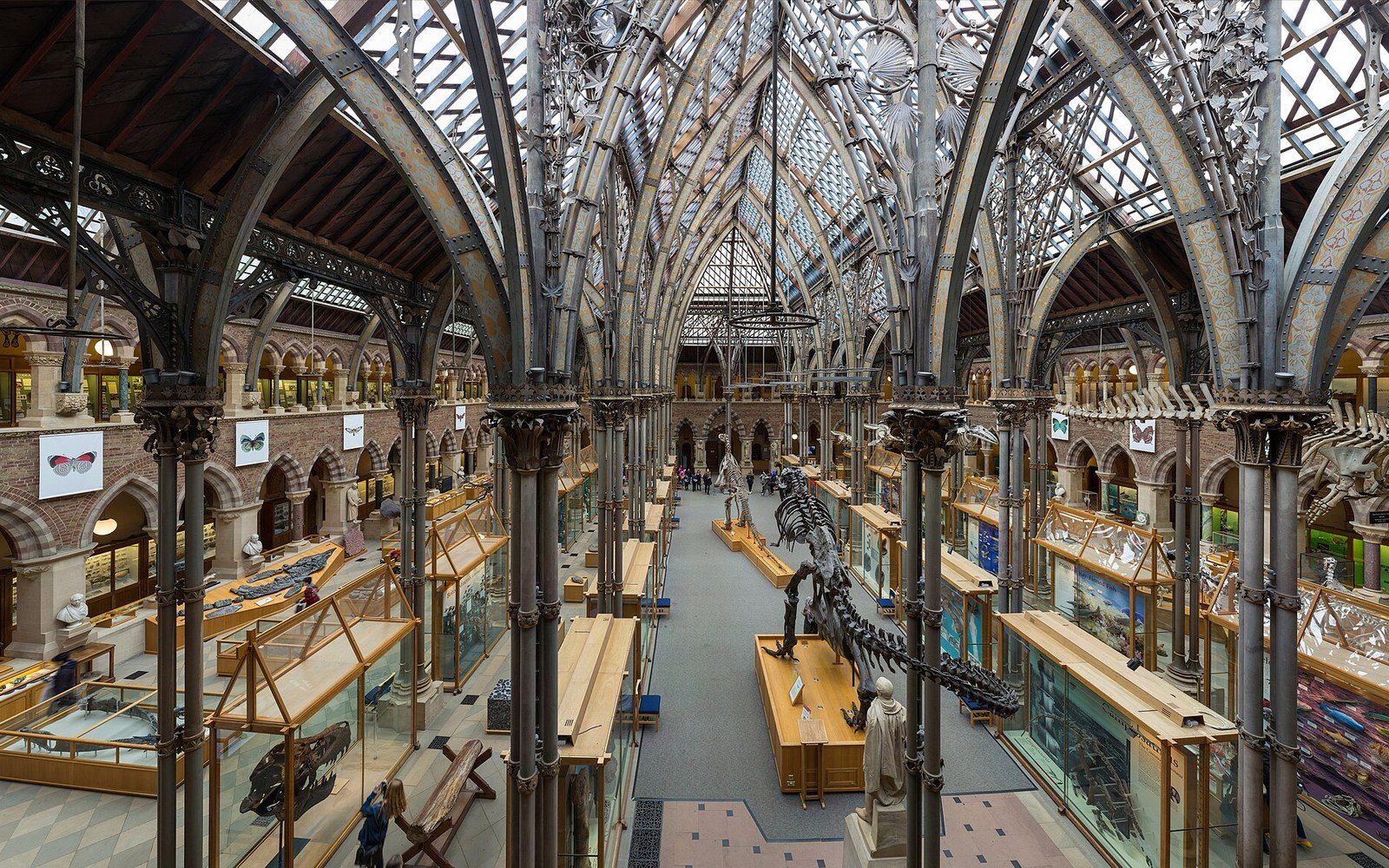
History of Science, the Botanic Garden herbarium, and other quiet rooms.
Oxford's quieter museums repay slow looking — and rarely have a queue
The city's reputation runs to the big four — the Pitt Rivers, the Ashmolean, the Museum of Natural History, the Bodleian — but Oxford has always accumulated things on a smaller scale too. The minor collections are where the curiousness shows through most clearly.
The History of Science Museum
The building earns its visit before you've read a single label. The Old Ashmolean on Broad Street is the oldest surviving purpose-built museum building in Britain, and the ground floor alone contains a density of astrolabes, armillary spheres, early microscopes, and sundials that would exhaust a week of careful looking. What makes it unusual is the basement: a working chemistry laboratory with equipment spanning several centuries, presented with almost no barrier between the visitor and the objects. Nothing is gilded or over-dramatised. The collection is simply arranged and trusted to be interesting, which it is.
The museum is free, rarely crowded, and takes between forty minutes and two hours depending entirely on how long you spend on any given case. Give yourself a morning and don't rush the clocks.
The Botanic Garden Herbarium
The Botanic Garden off the High Street is well-known; its herbarium is not. Pressed, dried plant specimens have been kept here since the garden was founded — some sheets date back centuries and bear handwritten annotations by the botanists who collected them. Access to the study collections is generally by appointment, not open walk-in, but the herbarium runs occasional public events, and the idea of it — ordered cabinets of flattened, labelled plants organised by relationship rather than beauty — is worth knowing about if you have any interest in how natural history actually worked before photography.
What Else Accumulates
Several Oxford colleges maintain their own small collections: portrait galleries, libraries with display cases of rare books, chapels with medieval glass that rivals anything in a dedicated museum. These are not consistently open to the general visitor, and access depends on whether the college is receiving visitors on that particular day — which is true of most college buildings and always worth checking on the morning you plan to go.
The Oxford Museum of the History of Education, tucked into a former school building in Merton Street, is another example of the kind of thing Oxford quietly keeps: obsessively narrow in focus, unexpectedly absorbing once you're inside.
The collection is simply arranged and trusted to be interesting, which it is.
None of these places will appear on a highlights reel. That is almost the point. The small collections are what happens when an old university town spends eight centuries accumulating and never quite gets round to throwing anything away.
This guide carries no prices, opening times or event listings — they expire. Check anything time-sensitive on the day, at the door.
Related