The Half-Day Walk
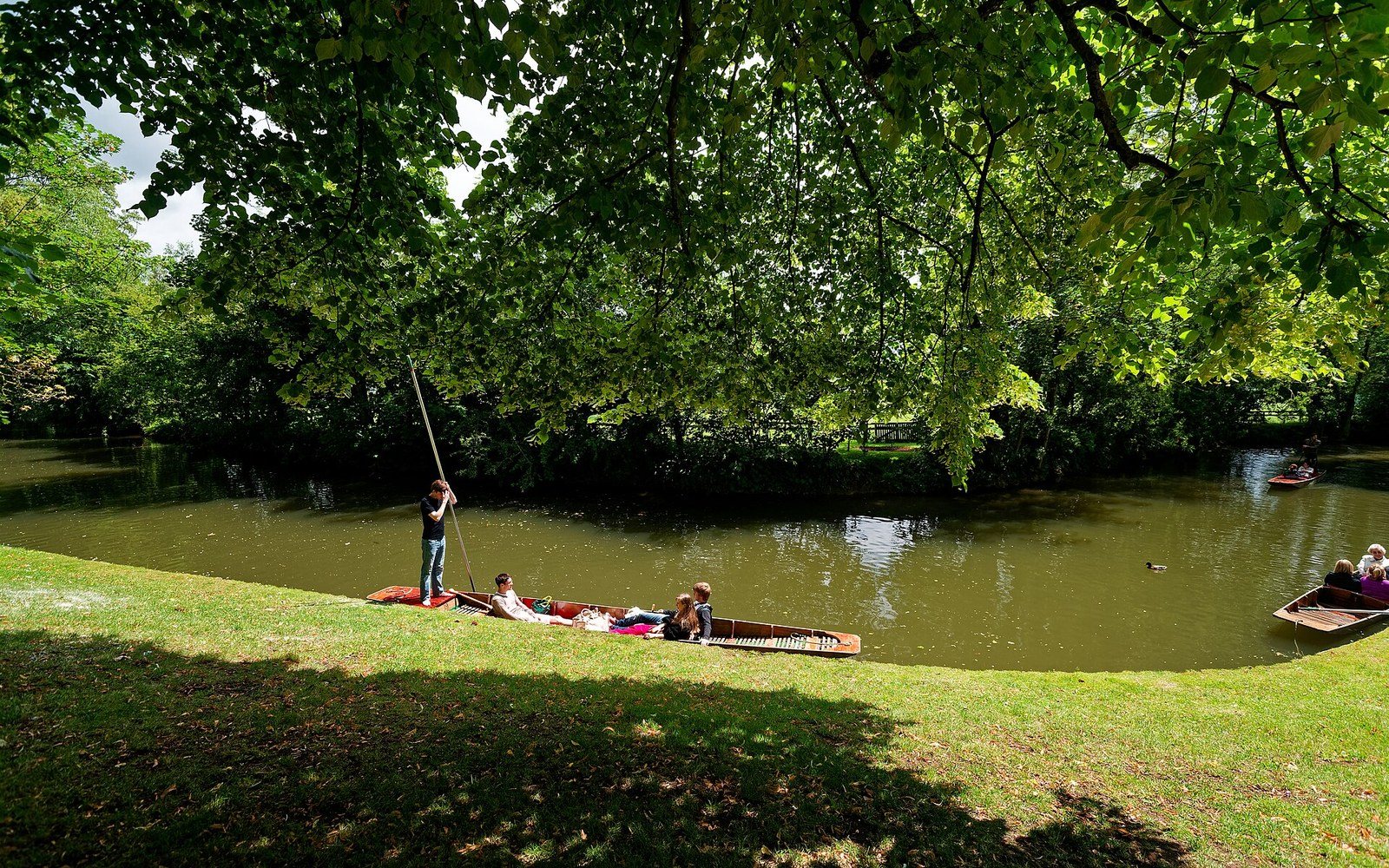
A single route from the city's heart to the water's edge — no queue, no ticket, nothing to join.
From Stone to Grass
Start at the Sheldonian Theatre, not because it demands it, but because the view from outside — the row of bearded stone emperors on their posts, Wren's drum-and-lantern dome behind them, the Bodleian's tower of the Five Orders closing the courtyard — is one of the most concentrated architectural moments in England, and it costs nothing to stand in it. You are in the Bodleian's ceremonial precinct. Catte Street runs south past the Camera, Radcliffe Square opens to your right: take a moment. The Radcliffe Camera is the round one, which always needs saying, because first-timers confidently stride into the Bodleian's main gate looking for it when it is standing in the open air thirty metres away. Walk through to Radcliffe Square, stand in the middle, and look all four ways. You will not need to photograph it; you will simply remember it.
Cut south through the passage between Brasenose College and St Mary the Virgin — the university church with the Gothic tower you can climb if your knees are up to it — and you emerge on the north side of the High Street, a little east of the Covered Market. If you need coffee before the meadows, this is the moment: the Covered Market is a short walk west along the High on this same side, through its arcade entrance and has been feeding Oxford since the eighteenth century. It is not a food hall in the modern sense; it is a working market with a butcher who has been there longer than most of the students. Get what you need and come back out.
Continue south on St Aldate's — the wide road running down from Carfax tower towards the Thames. Christ Church's Tom Tower is the great gate ahead of you on the left, Tom Quad beyond it if the porters are admitting visitors. College access is never guaranteed: whether you can walk in on any given day depends on season, exams and the college's own schedule, so glance at the notice board by the gate rather than assuming. If Christ Church is closed to visitors, it does not matter — the route doesn't need it. Walk past the main gate and continue down St Aldate's to the War Memorial Garden entrance on your left. That gets you in without touching the college at all.
Through the Meadow
The path from the War Memorial Garden leads almost immediately into Christ Church Meadow: open grassland running down to the Thames on one side and the River Cherwell on the other, with Oxford's towers and spires sitting on the skyline behind you like a stage flat. The formal elm avenue — Broad Walk — runs straight ahead. Take it, or cut left along the river path; both routes circle to the same place, and both are free. In spring the meadow holds cows and the occasional heron; in midsummer it holds a great many tourists and their children; in autumn it holds low mist over the water in the early morning that makes the whole thing look like an illustration for a Victorian novel. The circuit around the meadow's edge is comfortable inside an hour.
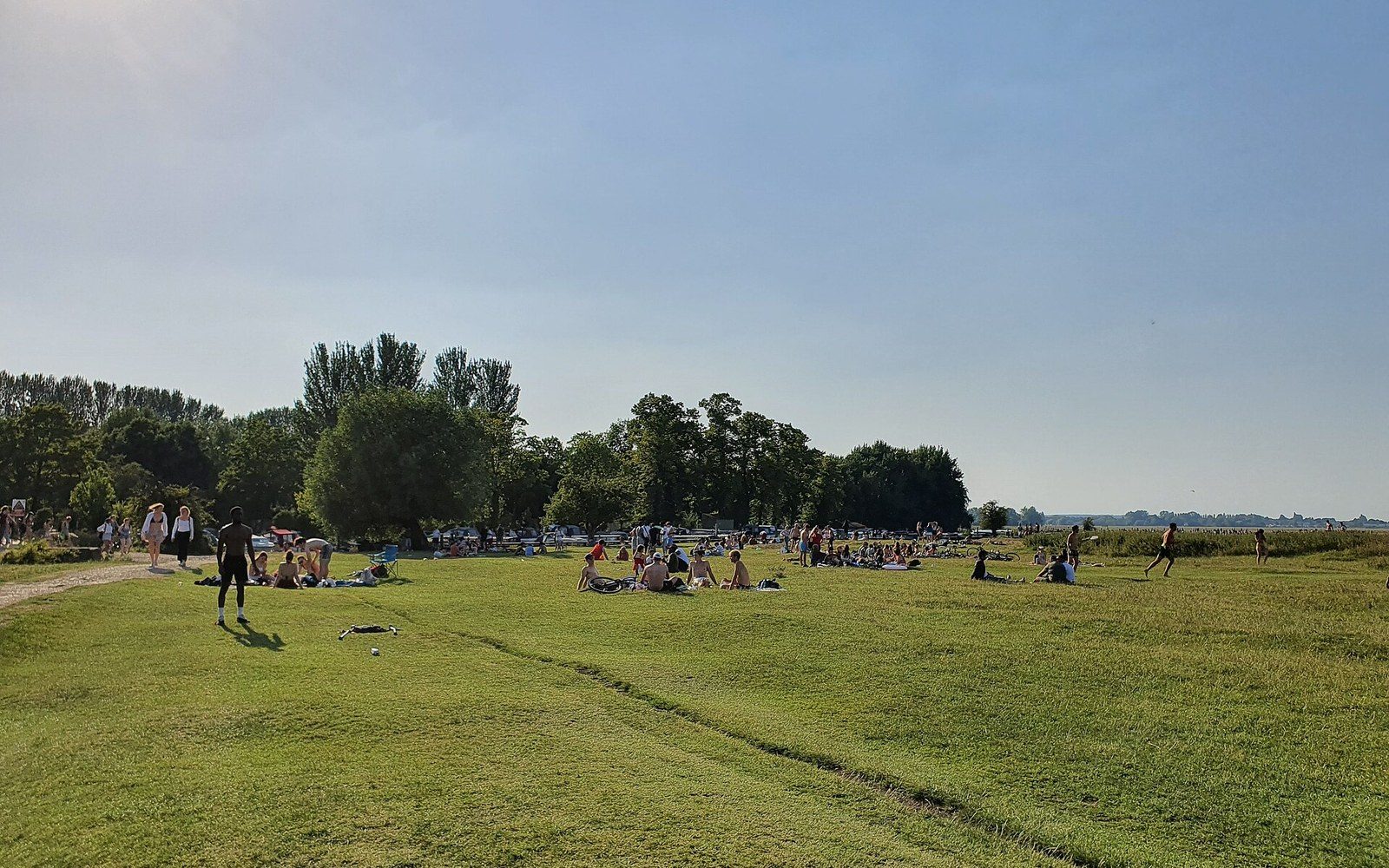
At the southern end, where the Cherwell meets the Thames (called the Isis here, in the Oxford custom, though it is the same river), there is a confluence that is easy to miss. Walk to the riverbank and look east: the Cherwell comes in through the willows, punts sometimes nosing around the bend. A punt is a flat-bottomed boat propelled by a pole rather than an oar — slower, more precarious, and much more entertaining to watch someone else fail at than to attempt yourself on a first visit. The meadow keeps its edges wilder here, and you are very far, in feeling, from the queueing outside the Bodleian.
Come back north along the Cherwell path — the east side of the meadow, close to the water. In early summer the bank opposite Magdalen College's grounds is loud with birds. You will pass under the stone arch of the footbridge and emerge near the Rose Lane gate, which brings you back out onto the High Street near Magdalen Tower. You have now walked the full circuit without paying for anything and without standing in a single queue.
You have now walked the full circuit without paying for anything and without standing in a single queue.
Back Through Jericho
If your legs want more — and the route so far is only three kilometres, generous in its pauses — there is a logical extension north and west that turns a half-day walk into a genuine morning's work.
From Magdalen, walk back up the High Street to Carfax, then take Queen Street and New Road west past the castle mound. Oxford Castle is not medieval in the tourist-attraction sense — it has been a prison for most of its post-Norman existence — but the mound is real and old, and the view from the top of it, if you climb, places the city's geography clearly: the canal to the northwest, Jericho's terraces below you, the Thames hidden somewhere beyond the gasometers. Take Hythe Bridge Street down to the Oxford Canal. The canal is genuinely quiet — narrow-boats moored, towpath unencumbered, ducks conducting canal business with great seriousness. Walk north along the towpath for ten minutes into Jericho, Oxford's Victorian terraced quarter, built for canal workers and the operatives of the university press. The streets — Walton Street, the little rows running off it — are residential and ordinary and completely off the tourist axis. There are cafés on Walton Street where nobody is on a walking tour.
The return from Jericho is straightforward: back down Walton Street towards the city centre, past the Ashmolean Museum on your right if you want to step in for twenty minutes (the Ashmolean is free, and the staircase alone is worth the door), and down Beaumont Street back to the Sheldonian. You are where you started. The full route — meadow circuit plus Jericho extension — runs to something between six and seven kilometres on flat ground, and takes three to four hours walked with the pauses the route invites.
What this walk does not offer: the Bodleian's interior, Magdalen's deer park, the Botanical Garden across the road from Magdalen, the Pitt Rivers. What it does offer is the correct spatial understanding of Oxford — the way the city is very small and the countryside is very close, the way water appears constantly, the way you can walk from a seventeenth-century ceremonial courtyard to open grazing meadow in under twelve minutes on foot. That is the thing most first-time visitors miss because they spend the morning in a ticket queue. This is the alternative.
- 18th centuryCovered Market established
- Victorian eraJericho built for canal workers and Oxford University Press operatives
This guide carries no prices, opening times or event listings — they expire. Check anything time-sensitive on the day, at the door.
Related