For Every Famous Thing, the Emptier One Nearby
Oxford's most visited spots have quieter twins. Here's how to find the one without the queue when the other has a crowd.
The pattern, and why it holds
Oxford is a city where fame is weirdly concentrated. A handful of buildings absorb the crowds while streets ten minutes away sit almost empty. This isn't because the famous places are the best — it's because they appear on every list, they're easy to find, and once a crowd forms it signals to the next visitor that this is the right place to be. The result is a city that runs at two speeds simultaneously: crushed in one corner, tranquil in the next.
Knowing the pairs is most of the work.
The pairs
The Radcliffe Camera → the Sheldonian Theatre courtyard. The Camera draws every camera in Oxford, and rightly: it's a remarkable building. But access to the interior is restricted to library card holders, so most visitors stand outside photographing it from the same angle. Walk two minutes north and you'll find the Sheldonian Theatre's forecourt — Wren's building, the stone emperors along the railings, and a view back toward the Camera that is actually better than the reverse. On a weekday morning it's nearly empty.
Christ Church → Magdalen College. Christ Church is Oxford's most visited college for reasons that compound themselves each year. Magdalen sits at the far east end of the High Street, fifteen minutes' walk from the city centre, and the journey alone filters out a large share of casual visitors. The college grounds include a deer park, a water meadow, and a riverside walk that few tourists bother to find. Check access on the day at the porters' lodge as you would for any college, but the walk east along the High is worth it regardless.
The Bodleian's Divinity School → the Museum of Natural History. Tour groups queue for the Divinity School — the medieval hall beneath the Bodleian, and genuinely worth the trouble. But on busy days, the Museum of Natural History on Parks Road is ten minutes north and almost always walkable straight in. The building is the rival of anything in central Oxford: Gothic Revival cast iron and glass, dinosaur skeletons, and a ceiling that behaves like a cathedral. Most days it holds a fraction of the crowd the Bodleian attracts.
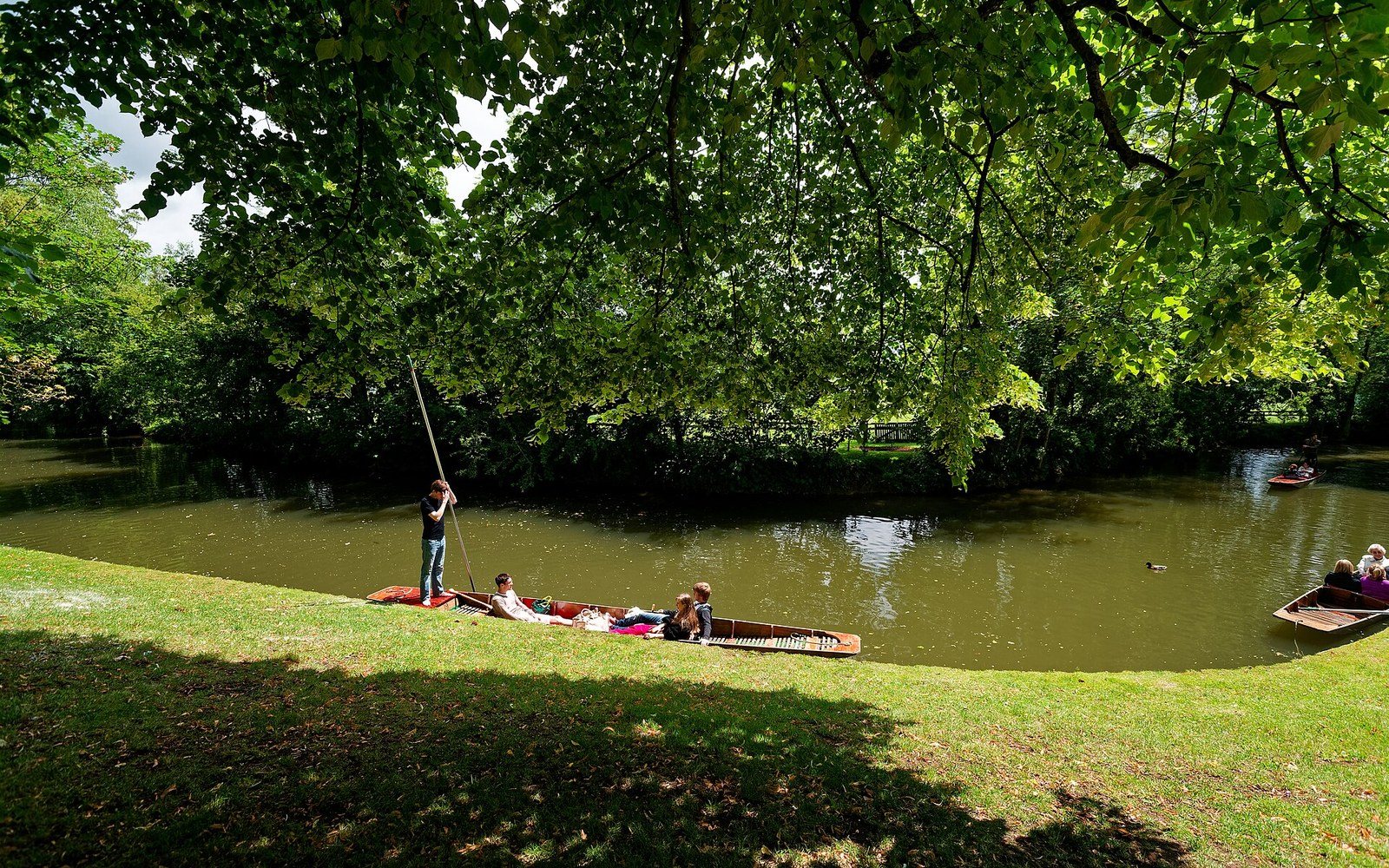
Christ Church Meadow → Port Meadow. The Meadow is the default open-air escape, and it's good — the circuit along the River Cherwell and back through the avenue is a proper walk. But Port Meadow is something else: common land on the north-west edge of the city that has genuinely never been ploughed, running down to the Thames with horses grazing loose on it. It takes slightly longer to reach, which is the entire reason it stays quiet. Go in the late afternoon when the light is low on the water.
The college grounds include a deer park, a water meadow, and a riverside walk that few tourists bother to find.
The Covered Market → Jericho. The Covered Market is real, useful, and worth a lap. But it's also well-known, and on a Saturday it fills. Jericho, the neighbourhood immediately north-west of the city centre, has its own high street — Walton Street — with independent shops, cafés and a slower pace. It's where more Oxonians actually go when they want a coffee and a walk without occasion.
The Ashmolean's ground floor → the Pitt Rivers. The Ashmolean's big-ticket objects — the Alfred Jewel, the Powhatan Mantle — are on the ground floor and that's where tours cluster. The upper floors of the Ashmolean thin out considerably. Or go to the Pitt Rivers entirely: attached to the Museum of Natural History, typologically arranged by object type rather than culture, and among the strangest museum experiences in the country. Busy only by its own modest standards.
The principle generalises. When you find yourself in a queue or pressed in a crowd, ask what the equivalent thing is that nobody is currently walking toward. In Oxford, it is almost always within fifteen minutes. The city is small enough that the emptier version of almost everything is genuinely close — it just isn't on the same map.
Related